

Turning Your Holiday Park Into a Media Company: A Content Strategy Big Brands Won't Tell You About
Quick answer:
The holiday parks winning the most repeat, direct bookings aren't the ones spending the most on adverts — they're the ones publishing useful, honest content (photos, videos, guides, guest stories) consistently enough that guests start following them the way they'd follow a favourite local magazine. Content marketing for holiday parks works when it's treated as an ongoing media habit powered by guest data and automation, not a one-off blog post nobody follows up on.
Years ago, a tractor company in Illinois faced a problem every holiday park owner would recognise instantly: farmers weren't buying much equipment, money was tight, and traditional advertising wasn't moving the needle. So the company did something odd for the era — it launched a magazine. Not a brochure dressed up as a magazine, an actual magazine, full of genuinely useful farming advice, success stories, and practical tips that had nothing to do with buying a tractor that week. That magazine, The Furrow, is still published today, over a century later, and it did more to build brand loyalty than any advert ever could. The company had figured out something most businesses still haven't: if you want people to trust you, be useful to them before you ask for anything.
Holiday parks are sitting on a version of this opportunity that most competitors are ignoring completely.
Why "content marketing" sounds bigger than it actually is
Say the phrase "content marketing" to a family-run park owner and you can watch the eyes glaze over — it sounds like something only a corporate marketing department with a six-figure budget could pull off. In reality, a holiday park has more raw material for genuinely engaging content than almost any other small business: dramatic scenery, real weather, real wildlife, real families having real holidays, seasonal changes, local events, walking routes, and staff with decades of stories. The park doesn't need to invent anything. It needs a system for capturing what's already happening and getting it in front of the right guests at the right moment — which is exactly where holiday park marketing software and guest segmentation earn their keep.
Acting like a media company, not an advertiser
The shift that matters is subtle but total: an advertiser interrupts people to sell them something; a media company earns attention by being worth paying attention to. A weekly photo update of the site in autumn light. A short video of the same walking trail in every season. A guest's own story about their tenth consecutive summer at the same pitch. None of this reads as a sales pitch, and that's precisely why it works — it builds the kind of familiarity that makes a family choose your park again without comparing three OTA listings first.
This only scales if it's built on top of a real guest database rather than a public social media following alone. Social platforms are rented land — algorithms change, reach drops, and a park's best content can vanish into a feed nobody sees. A properly maintained guest CRM with segmentation by past stay, accommodation type, and interests turns the same content into a direct, owned channel: an email that goes straight to the 400 families who stayed in static caravans last July, not a post competing with cat videos.
The habit beats the campaign
Big brands can afford agency-produced campaigns. Family parks generally can't, and trying to imitate that model usually produces one glossy video a year and then silence. The better model — the one independent publishers and small media businesses have always used — is a sustainable habit: one short update a week, sent consistently, rather than one elaborate push twice a season. Automation is what makes the habit survive contact with a busy front desk and a short-staffed office. Pre-built, scheduled email sequences — a welcome series for new bookers, a seasonal update for past guests, a "we've missed you" nudge timed to when a family usually rebooks — do the maintaining while the team focuses on running the park.
Turning guests into your unpaid marketing team
The most effective content a park can publish often isn't produced by the park at all — it's the guest photo of a sunrise over the pitches, the review mentioning the same friendly warden by name three years running, the video a teenager posted of the play area. Parks that actively invite and collect this material (a simple sign, a QR code, a follow-up email asking "how was your stay, mind if we share it?") build a library of authentic proof that no professional photographer could fake, and it costs almost nothing beyond the asking.
Consistency is the whole strategy
If there's one lesson from every successful long-running content effort — that century-old tractor magazine included — it's that consistency beats brilliance. A mediocre update sent every week for a year outperforms one brilliant campaign sent once. For a small park team, that means picking a rhythm that's genuinely sustainable (fortnightly is better than weekly-but-abandoned-by-June) and letting automation carry the parts that don't need a human touch: the sending, the segmenting, the reminders. The creative spark — deciding what story to tell this fortnight — stays human, because that's the part guests can actually feel.
Knowing whether it's actually working
Unlike a paid advert, content built on a guest database can be measured properly: open rates on the seasonal update, click-throughs to the rebooking page, and — most tellingly — whether the guests receiving it are the ones booking direct next season instead of resurfacing on an OTA. This is the quiet advantage of running content through park management software rather than a generic email tool: the same platform holding the booking history can show whether a guest who read three seasonal updates in a row rebooked without ever touching a comparison site. Over a year or two, that data turns "content marketing" from a nice-to-have into a measurable, defensible line in the marketing plan — one with a clearer return than most paid advertising a small park could otherwise afford.
Starting small without it feeling like a burden
None of this requires hiring anyone or learning video editing. The realistic starting point for most parks is smaller than owners expect: one photo taken on a phone during a Tuesday walk around the site, one paragraph about what's blooming or what event is coming up, sent to guests segmented by how recently they stayed. The habit matters more than the polish. Parks that wait until they have a "proper" content plan, a budget, or a hire in place typically never start — the ones that begin with something small and automate the sending are the ones still doing it, and benefiting from it, two years later.
Key takeaways
- Holiday parks have more authentic content material (scenery, seasons, guest stories) than most small businesses, and most aren't using it.
- Content works as a relationship-building habit, not a one-off campaign — consistency matters more than production value.
- A guest CRM with segmentation turns content into a direct, owned channel instead of a rented social media audience.
- Automation sustains the habit; the team's time goes into the story, not the sending.
- Guest-generated content (photos, reviews, videos) is often more persuasive than anything a park could produce itself.
Frequently asked questions
Yes — the parks that succeed usually rely on a simple, automated rhythm (a fortnightly email, seasonal photo updates) rather than a dedicated team, using segmentation and scheduling tools to do the heavy lifting.
Social platforms are a rented, algorithm-controlled audience. Content marketing built around an owned guest database (email, guest CRM segments) reaches guests directly and consistently, regardless of platform changes.
Parks looking to turn their existing guest list into a genuine marketing channel can see how automated guest emails and segmentation work inside Parkcore's guest CRM, without needing a dedicated marketing hire to run it.
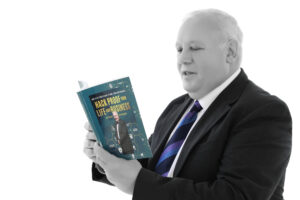
Bio for Stephen Richards: Born in Colwyn Bay North Wales, Steve's introduction it Computers was at secondary school in 1974. That first year, Machine Code was hand written onto gridded paper and sent to Connah's Quay Technical College where is was copied to punch card and then entered into a mainframe computer. The results printed out were sent back for the following week!
Steve left School in 1976 joining the Royal Air Force to work on RADAR and communications equipment. His last 5 years involved working in an Automatic Test Equipment (ATE) department on the System Management Team and also writing models for Microchips. It was a good job that he had kept up with computers which had become rather a passion by the time he started in ATE.
During that time the main Mainframe we replaced in a £3.9 million upgrade reducing the run time of the biggest ATE program from just under 2 weeks to the time it took for a finger to come off a depressed return key!
Leaving the RAF after 18 years service Steve worked for a Charity (Apex Leicester Project) before returning to electronics at Sonatest in Milton Keynes which after 3 or 4 years led to a Job at Telematica the then development arm of Trafficmaster PLC (Tm). Eventually brought in-house at Tm he worked moved into the IT Support Team with his last project moving email from a Linux Box to Microsoft Echange for the 300 users in the company each of whom typically had 5 email addresses.
In 2006 Steve left to start his own company back in North Wales, Computer Technical Solutions was an MSP and moved to become an MSSP following another of Steve's passions Cybersecurity. Officially retiring in 2025, by May 2026 that overactive mind started thinking about all of the software he had seen not just for MSSPs but also for his clients that was either extremely expensive or that didn't exist with a complete answer to the needs of the SME.
By August 2026 two significant pieces of software have been created. Netmon the Network Monitoring Software and the second release Parkcore aimed at Caravan/Lodge Holiday Parks..... And so it begins!